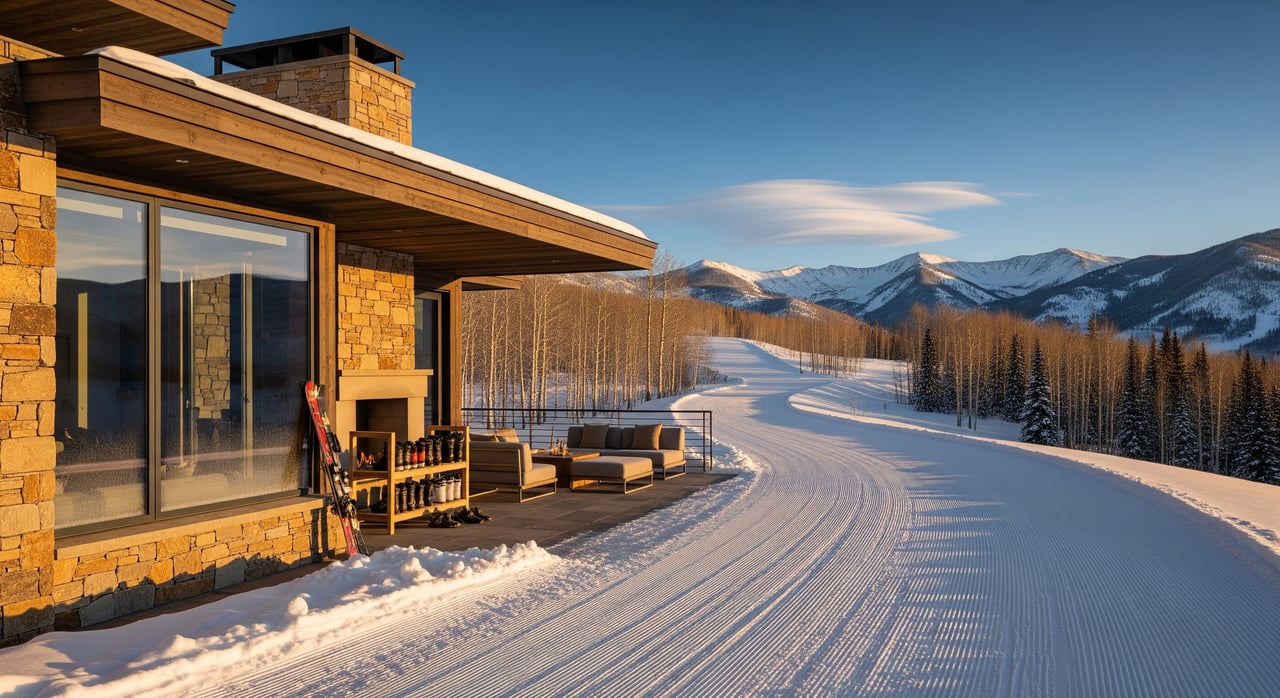
Picture clicking into your skis on your patio and sliding straight to the lift. In Snowmass Village, that dream is real, but listings use “ski-in/ski-out” loosely and the details matter. You want certainty about access, value, and the everyday experience before you commit.
In this guide, you’ll learn what “true” ski-in/ski-out means in Snowmass, how to compare properties by access tiers, which neighborhoods offer which type of access, and the HOA, title, and municipal items to verify. You’ll also get a practical checklist you can use during showings and negotiations. Let’s dive in.
What ski-in/ski-out means here
“Ski-in/ski-out” is a marketing term, not a legal one. In practice, it means you can move between your door and the resort’s trail or lift network in winter without using a vehicle or crossing a public road.
To verify it, focus on three things:
- Legal access. Look for recorded easements, deeded rights, or covenants allowing ski or pedestrian access across any neighboring property.
- Physical connection. Confirm there is a contiguous, skiable line between the property and a maintained trail or lift.
- Operational reality. Ensure the connector you plan to use is groomed or maintained for winter skiing, not just a summer path.
Use the official resort trail map and overlay it with parcel boundaries to confirm alignment. Start with the resort’s current materials on the Aspen Snowmass winter trail map, then compare them against county parcel information through Pitkin County. If a listing claims a connector or right-of-way, ask for the recorded document.
Access tiers that matter
A simple tier framework helps you compare properties apples-to-apples.
- Tier 1 — Doorstep, true slopefront. Step out, click in, and go. No walking or crossing roads. These carry the highest convenience premium.
- Tier 2 — Immediate ski-adjacent. A short 1–3 minute walk or protected path to a maintained trail or lift. Many Base Village fringe buildings fall here.
- Tier 3 — Ski-accessible, not slopefront. You might use a shuttle, drive a few minutes, or take a longer walk. Lower price per square foot, often larger layouts or more privacy.
- Tier 4 — Off-mountain, shuttle dependent. No practical ski access without a vehicle or regular shuttle. Valued more for lot size or neighborhood character.
Neighborhood patterns to know
Snowmass is unique because lift access radiates from several staging points. Where you buy determines your day-to-day experience.
Base Village and immediate surrounds
- Highest concentration of Tier 1 and Tier 2 options.
- Direct or short-walk access to the Village Express and Base Village services like dining, retail, and childcare.
- Many condo and hotel-style buildings offer on-site management and rental programs.
Elk Camp and mid-mountain zones
- Certain lots and buildings can be ski-in/ski-out depending on trail alignment.
- Access can be seasonal or vary with grooming. Verify whether winter maintenance supports consistent ski use.
The Meadows, Brush Creek, and perimeter areas
- Often Tier 2 or Tier 3, with reliance on village shuttles or a short drive during winter.
- Attractive for buyers prioritizing more space or quieter streets over immediate lift proximity.
Private club enclaves
- Some homes benefit from private amenities or club-adjacent access.
- Membership requirements and governance can influence daily use, guest access, and resale.
Verify rights and maintenance
“Close to a trail” is not the same as having the right to use it. Confirm:
- Recorded easements that permit ski and pedestrian use across common areas or resort land.
- Who maintains the connector. Ask whether grooming, snowmelt systems, or sidewalks are serviced by the HOA, the resort, or the town.
- Whether any planned resort adjustments could change access. Monitor current maps and public updates from Aspen Snowmass and contact the Town of Snowmass Village for planning context.
HOA, title and rules
Before you write an offer, review governance and legal items that can affect your use and investment goals.
- Covenants and rules. Look for policies on exterior work, ski lockers, hot tub additions, garage use, and any limits on short-term rentals.
- Reserve funds and assessments. Slopefront buildings often carry higher operating costs for snowmelt, heated walks, roof snow removal, and private grooming agreements. Review budgets and reserve studies.
- Title and easements. Identify all pedestrian, ski, and vehicular easements. If access depends on a third party or is revocable, understand the risk.
- Municipal requirements. Snow removal and road maintenance can be municipal or HOA responsibilities. For licensing and lodging taxes, consult Snowmass Village and Pitkin County guidance via Snowmass Village and Pitkin County.
- Safety and stability. Ask about avalanche mitigation history and slope stability near the property. For regional advisories and practices, check the Colorado Avalanche Information Center.
- Colorado HOA framework. For consumer resources about common interest communities, use the state’s HOA Information and Resource Center.
Value drivers in Snowmass
What pushes pricing and liquidity higher for slopefront property:
- Genuine door-to-trail access. Time savings and ease of use are priceless during peak season.
- Proximity to Base Village. Being near lifts, dining, retail, and childcare increases enjoyment and rental appeal.
- Ski-optimized layouts. Ski rooms, heated boot racks, direct exterior access, and slope-level lockers matter.
- Private club adjacency. Exclusive amenities and services can add to the premium.
- Views and outdoor spaces. Decks, hot tubs, and living areas oriented to mountain aspects and runs.
- Secure parking and access. Heated garages or deeded spaces simplify winter living.
Factors that adjust value up or down:
- HOA fees versus services. Higher fees can pencil if they include grooming, snowmelt, shuttle, concierge, and on-site management.
- Rental program participation. Professional programs can support carrying costs but may limit owner use windows.
- Design review constraints. Strict rules can limit expansion or exterior modifications.
- Future resort or municipal changes. Trail realignments or lift projects can shift convenience, either positively or negatively.
Step-by-step buyer checklist
Use this checklist through showings and negotiations.
Pre-offer checks
- Overlay the current resort trail map on parcel boundaries to confirm a continuous skiable line.
- Request the deed, plat, and all recorded easements for ski, pedestrian, and vehicular access.
- Ask the HOA for CC&Rs, bylaws, rules, current budget, reserve study, and meeting minutes from the last 12–24 months.
- Verify who maintains adjacent trails or connectors and how they are funded.
- Confirm any resort notices about planned trail or lift changes using Aspen Snowmass.
Contract-stage due diligence
- Order a full title report and review all encumbrances and easements.
- Schedule inspections that focus on winter stress points: roof, snowmelt systems, drainage, and ice dam history.
- Confirm utilities and winter access, including snowplow and emergency vehicle access.
- Review HOA financials for assessments, litigation history, and compliance costs tied to winter operations.
- If applicable, review any club membership terms, transfer fees, and buyer qualifications.
Operational and day-to-day items
- Clarify owner and guest parking limits during peak season.
- Inventory storage for skis and boots, and whether the unit has exterior access for gear.
- Review on-site services like concierge, private shuttles, and security.
- Ask whether public foot traffic from adjacent trails affects privacy.
Day-to-day slopefront living
The best ski-in/ski-out homes are set up for easy transitions. Look for:
- A dedicated ski entry with benches, heated boot racks, and durable flooring.
- Snowmelt on key exterior paths and decks.
- Sound attenuation and privacy screening on slope-facing sides.
- Simple guest flow from the slope to shared amenities like locker rooms or hot tubs.
Ask for a winter video of the exact route you will ski to and from the property. If you cannot tour in peak season, this is the next best thing.
Work with a local advisor
Buying slopefront in Snowmass is about more than distance to a lift. It is about legal access that lasts, maintenance agreements that work, and a floor plan that fits your lifestyle. As Aspen natives with construction insight and full-valley reach, we help you validate access, read HOA budgets, and evaluate the systems that make winter living effortless.
If you are considering a Snowmass Village ski-in/ski-out purchase, connect with Team Hansen for a private consultation or discreet property tour.
FAQs
What does “true” ski-in/ski-out mean in Snowmass?
- It means direct, winter-ready access from your door to a maintained trail or lift without using a vehicle or crossing a public road, supported by recorded rights and observable grooming.
How do I confirm a property’s ski access before I offer?
- Overlay the resort trail map on parcel boundaries, review recorded easements in title, and ask for a winter access video; verify maintenance duties with the HOA, the town, or the resort.
Can ski access change after I buy?
- Yes, if access relies on third-party easements or if the resort re-routes trails or lifts; confirm permanence and maintenance obligations during due diligence.
Why are slopefront HOA fees often higher?
- Slopefront buildings fund snowmelt systems, heated walks, grooming agreements, and enhanced services like concierge or shuttles, which increase operating costs.
Do short-term rental rules affect value in Snowmass?
- Local licensing, lodging taxes, and HOA rules can shape rental income and owner use, so review Snowmass Village and Pitkin County requirements plus your HOA documents early.