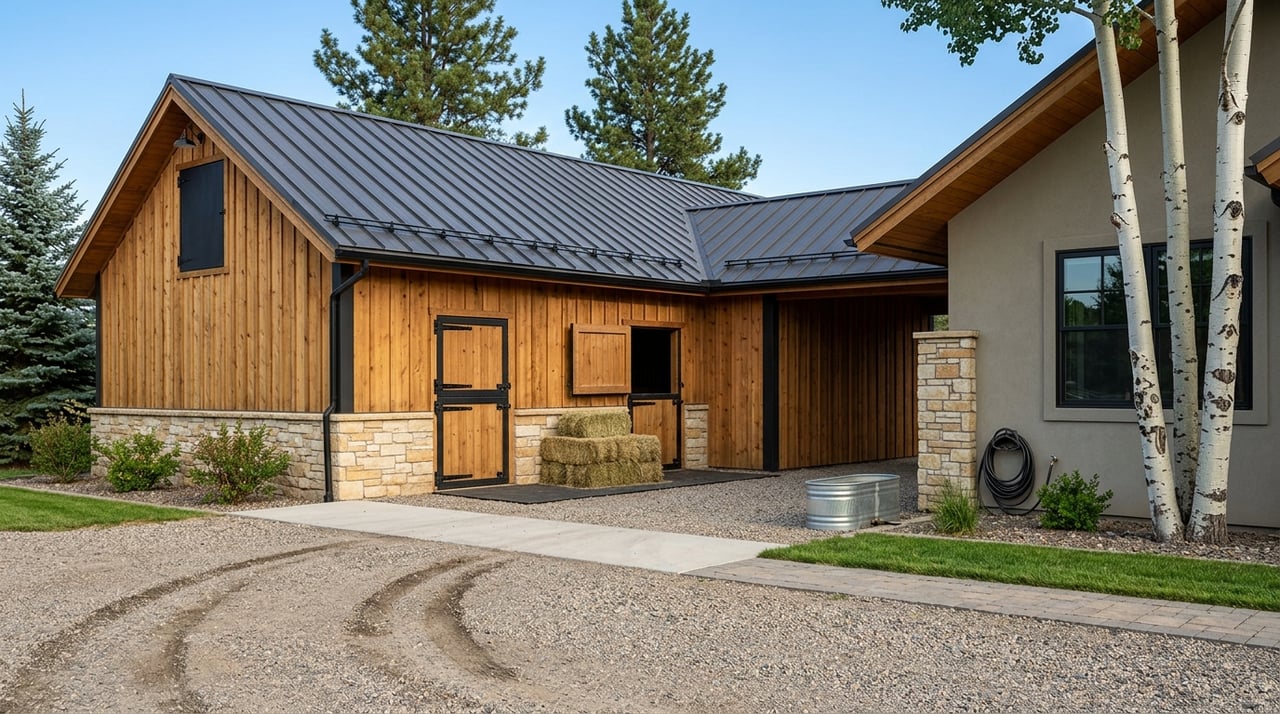
If you are dreaming about a horse property in Woody Creek, it is easy to focus on the view, the pasture, or the quiet. But with acreage in this part of Pitkin County, the real question is whether a parcel truly works for the way you want to live. If you want room for horses, a barn, equipment, and year-round access, you need more than open land. You need a property that makes sense on paper and on the ground. Let’s dive in.
Why Woody Creek Appeals to Acreage Buyers
Woody Creek has a long-standing rural identity, and that matters when you are shopping for land with equestrian goals in mind. Pitkin County’s Woody Creek master plan emphasizes preserving rural character, open space, and historic water rights. It also recognizes ranching and farming as low-impact uses, with small holdings for cattle and horses described as customary and appropriate.
That is an encouraging backdrop for buyers who want a true rural property experience. Still, “horse-friendly in spirit” is not the same as automatically ready for equestrian use. Each parcel needs to be evaluated for zoning, access, infrastructure, and physical layout before you assume it can support your plans.
The area also offers a lifestyle layer that attracts many second-home and legacy buyers. Pitkin County notes that the nearby Roaring Fork Gorge includes the Rio Grande Trail, fishing easements, and a boat ramp at Wilton Jaffee Sr. Park, with year-round trail use and river recreation. Depending on the property, that can be a meaningful amenity or an important factor in how you think about privacy, activity, and traffic patterns.
Start With Zoning and Development History
One of the first steps in buying acreage in Woody Creek is confirming exactly how the parcel is zoned. Pitkin County’s rural districts include AR-10 and RR, and the differences matter. AR-10 is intended for small-scale agricultural activity and large-lot residential development that maintains rural character, while RR is intended for limited recreational uses, limited residential development, and only small new structures.
For buyers, that means you should not assume every rural parcel has the same flexibility. A property may look large enough for a barn, guest house, riding arena, or future expansion, but the zoning district and prior development history may tell a different story. In some AR-10 areas, development-right questions can also involve county review tied to growth management rules.
Remote parcels deserve extra caution. Pitkin County says RR areas are often more than a half mile from winter-maintained public roads and may lack utility service districts. That can make them much harder and more expensive to service, especially if you want reliable access for trailers, feed deliveries, contractors, or future construction.
Usable Ground Matters More Than Acre Count
In Woody Creek, acreage alone does not tell you much. What matters is how much of the land is actually usable for your goals. A beautiful parcel with steep terrain, drainage constraints, or awkward shape may offer less practical equestrian value than a smaller property with level, functional ground.
If you are considering horses, think through the full layout early. You will want enough room for a barn or loafing structure, turnout areas, hay storage, trailer maneuvering, and snow storage in winter. Those pieces need to work together, not just fit somewhere on a survey.
The Woody Creek master plan also gives helpful context on infrastructure. It describes roughly 2 acres as the minimum size it sees as supporting a leach field, septic system, and well. That is not a universal lot-size rule, but it shows why drainage, buildable area, and infrastructure capacity are central to evaluating land here.
Barns, Sheds, and Arenas Need Early Review
A common mistake with rural property is assuming accessory structures are simple. In Pitkin County, they often are not. The county recommends a pre-application conference for actual projects, and it states that building permits are required for all structures regardless of size or use.
That means a barn, shed, loafing structure, or major remodel should be reviewed early. The same is true if you are thinking about an arena, expanded utility areas, or future additions. On a well-bought property, these improvements can be part of a clear long-term plan. On the wrong parcel, they can become expensive surprises.
This is where construction-informed guidance can be especially useful. A site may appear straightforward during a showing, but grading, setbacks, access requirements, and permit pathways can materially affect what is realistic.
Water and Septic Are Core Due Diligence
Water is one of the most important issues when you buy acreage in Woody Creek. Pitkin County says every new well in Colorado that diverts groundwater must have a permit, and it also notes that private well water quality is the owner’s responsibility. The county does not test residents’ well water, which means buyers should be very clear on the property’s well status and practical water use.
If the home is outside a sewer district, it will be served by an OWTS, which is a septic system. For an equestrian property, that raises practical questions about capacity, siting, future improvements, and how the system interacts with available buildable area. Septic is never just a background item on acreage. It often shapes what can be built and where.
Irrigation rights are just as important for horse properties. Pitkin County says irrigation ditches are commonly used for lawns, gardens, and horse properties, but a ditch crossing a parcel does not by itself give the owner the right to pump water. You should confirm the actual water rights conveyed with the property rather than rely on assumptions based on what you can see on site.
Floodplain and Wetlands Can Affect Plans
Some of Woody Creek’s most attractive parcels are close to river corridors, meadows, and streamside areas. Those settings can be beautiful, but they may also bring additional review. Pitkin County says a floodplain permit is required for work within the designated 100-year floodplain.
The county also notes that many properties along streams and rivers contain wetlands or riparian areas. Its code allows greater stream setbacks when needed to protect streamside vegetation, wetlands, or riparian habitat. In practical terms, that can reduce the area available for structures, grading, crossings, or other improvements.
If a project involves earthwork in a wetland, additional permitting may apply. Pitkin County says nearly all earthwork within a wetland requires a U.S. Army Corps Section 404 permit, and projects disturbing more than 1 acre may also need Colorado stormwater construction permit coverage or a waiver. This is one reason why early site analysis matters so much with larger rural parcels.
Access Can Make or Break Daily Use
A horse property needs to work in all seasons, not just in summer. Pitkin County says winter road maintenance is done by priority, and some lower-priority roads may not be cleared until later in the day. In extreme conditions, county roads may not receive same-day maintenance.
That has real day-to-day implications. If you expect hay deliveries, horse trailer access, service calls, or reliable winter movement, you should understand how the road performs during actual snow events. A long driveway or remote setting may be charming, but it also needs to function when conditions are less forgiving.
Physical addressing matters too. Pitkin County controls physical addressing in unincorporated areas and requires address signage for all addressable structures. If a building sits more than 50 feet from the road, the sign should be placed at the driveway entrance, which supports emergency response, deliveries, and guest access.
If a property needs a new access point or changes to an existing one, Pitkin County says an access permit is required before a building permit is issued. Buyers should also confirm whether special district assessments apply, since the county lists a Woody Creek Metro District among active special districts.
Wildlife-Friendly Fencing and Site Planning
Fence design is another detail that can carry more weight than buyers expect. Pitkin County’s due-diligence guidance for rural land points buyers toward wildlife-friendly fencing rules, and noncompliant fencing may require a permit. That matters if you plan to contain horses, divide turnout space, or replace older fencing after closing.
The best approach is to evaluate fencing as part of the full site plan, not as a last-minute improvement. You want the property to function for horses while also fitting the county’s requirements and the site’s terrain, drainage, and access patterns.
A Smart Checklist for Woody Creek Horse Property Buyers
Before you move forward on an acreage or equestrian purchase in Woody Creek, it helps to organize your due diligence around the issues that matter most.
- Confirm the zoning district and the parcel’s development history
- Identify how much relatively level, usable ground the property actually has
- Verify whether barns, sheds, arenas, and future additions fit the permit path
- Review well status, water quality responsibilities, OWTS details, and irrigation rights
- Check for floodplain, wetlands, riparian setbacks, and drainage constraints
- Ask how roads and driveways perform during winter snow events
- Confirm address signage, emergency access, and delivery logistics
- Review fencing plans for compliance with wildlife-friendly fencing rules
- Check whether access permits or right-of-way permits may be needed
- Ask whether any special district assessments affect ownership costs
Why Local Guidance Matters in Woody Creek
Buying acreage in Woody Creek is rarely a plug-and-play process. The right property can support a remarkable mountain lifestyle with horses, privacy, and room to breathe. But the details behind that experience often live in zoning code, access logistics, water rights, and site constraints.
That is why local, property-specific guidance matters. When you evaluate a parcel with both market knowledge and practical site awareness, you are much better positioned to avoid surprises and make a confident decision. In a nuanced market like Woody Creek, that kind of preparation is often what separates a beautiful property from a truly workable one.
If you are considering acreage or an equestrian property in Woody Creek, Team Hansen can help you evaluate the land, the setting, and the practical questions that shape long-term value.
FAQs
What should you verify before buying acreage in Woody Creek?
- You should verify zoning, development history, usable ground, water and septic details, access, floodplain or wetland constraints, and whether your planned equestrian improvements fit the permit path.
Can you build a barn on a Woody Creek acreage property?
- Possibly, but you should confirm the zoning district, development history, and permit requirements first, because Pitkin County says building permits are required for all structures regardless of size or use.
Do Woody Creek horse properties always include water rights?
- No. Pitkin County says a ditch crossing a property does not automatically give the owner the right to pump water, so you need to confirm the actual water rights conveyed with the parcel.
How important is winter access for Woody Creek equestrian properties?
- Winter access is critical because some county roads are plowed later than others, and in extreme conditions some roads may not receive same-day maintenance.
Do floodplain or wetlands affect rural property plans in Woody Creek?
- Yes. Pitkin County says work in the designated 100-year floodplain requires a permit, and wetlands or riparian areas can trigger setbacks and additional review.
Are fences regulated on horse properties in Woody Creek?
- Yes. Fence plans should be reviewed for compliance with Pitkin County’s wildlife-friendly fencing rules, and some noncompliant fencing may require a permit.